Certified translation
Arabic certified translation for USCIS
Every message translated beside the original, with the Certificate of Translation Accuracy that 8 CFR 103.2(b)(3) asks for. Arabic is written in Arabic and runs right to left, and 22 regional varieties are recorded under it separately.
- Writing system
- Arabic
- Direction
- Right to left
- Spoken in
- 7 countries
- Varieties recorded
- 22
- Measured quality
- chrF 0.46 against a public corpus
Where Arabic is spoken
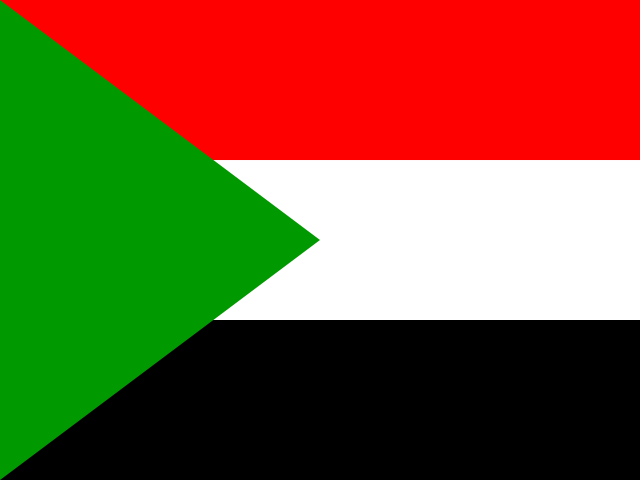
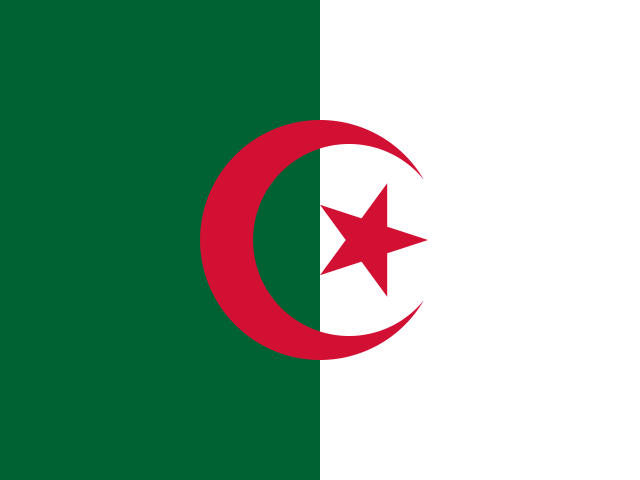
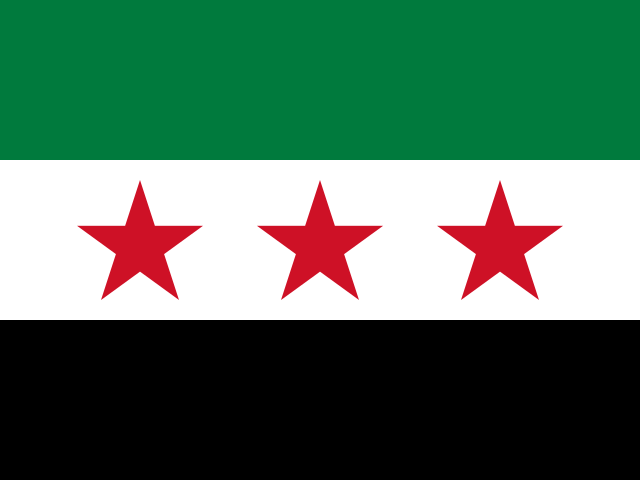
What to call yours
Clients rarely say “Arabic”. They say the name they grew up with, and it usually resolves the script, the vocabulary and sometimes the direction in one word. These are recorded separately so nobody has to know which language their own dialect is filed under.
| Variety | Script | Direction | Spoken in | What a translator needs to know |
|---|---|---|---|---|
| Algerian Arabic | Arabic | Right to left | Algeria | Darja; Maghrebi, heavy French influence. |
| Algerian Darija | Arabic | Right to left | Algeria | Algerian Arabic; Maghrebi. |
| Chadian Arabic | Arabic | Right to left | Chad | — |
| Darija | Arabic | Right to left | Morocco, Algeria | Moroccan or Algerian Arabic; say which. |
| Egyptian Arabic | Arabic | Right to left | Egypt | Masri. The most widely understood dialect across the region because of film and television. |
| Gulf Arabic | Arabic | Right to left | Kuwait, Bahrain, Qatar, UAE, Saudi Arabia | Khaleeji: Kuwait, Bahrain, Qatar, UAE, eastern Saudi Arabia. |
| Hassaniya | Arabic | Right to left | Mauritania, Western Sahara | Mauritania and Western Sahara. |
| Iraqi Arabic | Arabic | Right to left | Iraq | Mesopotamian; Baghdadi differs from southern. |
| Jordanian Arabic | Arabic | Right to left | Jordan | Levantine. |
| Lebanese Arabic | Arabic | Right to left | Lebanon | Levantine; heavy French borrowing. |
| Levantine Arabic | Arabic | Right to left | Syria, Lebanon, Jordan, Palestine | Syria, Lebanon, Jordan, Palestine. |
| Libyan Arabic | Arabic | Right to left | Libya | Maghrebi. |
| Modern Standard Arabic | Arabic | Right to left | Written register. | |
| Moroccan Arabic | Arabic | Right to left | Morocco | Darija. Far from Modern Standard Arabic — a translator who reads Levantine may not read this. |
| Moroccan Darija | Arabic | Right to left | Morocco | Moroccan Arabic. Far from Modern Standard Arabic — a translator who reads Levantine may not read this. |
| Msa | Arabic | Right to left | Modern Standard Arabic: written, not spoken at home. If the pages are chat, they are probably dialect. | |
| Palestinian Arabic | Arabic | Right to left | Palestine, Israel | Levantine. |
| Saudi Arabic | Arabic | Right to left | Saudi Arabia | Najdi and Hijazi differ from each other. |
| Sudanese Arabic | Arabic | Right to left | Sudan | — |
| Syrian Arabic | Arabic | Right to left | Syria | Levantine. |
| Tunisian Arabic | Arabic | Right to left | Tunisia | Derja; Maghrebi, heavy French and Berber influence. |
| Yemeni Arabic | Arabic | Right to left | Yemen | Conservative; retains features others lost. |
What USCIS actually requires
8 CFR 103.2(b)(3) is the whole of it: a full English translation, certified by the translator as complete and accurate, together with their certification that they are competent to translate from Arabic into English.
There is no approved-translator list, no credential requirement and no notarisation mandate — notarisation attests to a signature, not to accuracy. Summaries are not permitted at all, which is why a Arabic chat exhibit is produced message by message however long the conversation runs. What “USCIS approved” actually means.
What it costs
One record is $499, certified, whatever its length — a four-year conversation costs what a four-month one costs. Agencies commonly charge by the page and define a page as 250 words, which is survivable for a birth certificate and ruinous for a chat export. The arithmetic on 100 pages.
Certified translation for USCISSee pricing
Arabic is one of 167 languages across 26 writing systems. The full list, and all 98 regional varieties, is on the languages page and in the variety table.